End of an era for Robin Hood’s world-famous tree – but its legacy lives on
- Scientific evidence leads experts to believe the Major Oak has died after first spring with no leaves
- It is one of the UK’s best loved trees, said to have sheltered Robin Hood
- The iconic tree has watched over the forest for a millennium, and will continue to stand at Sherwood Forest to support wildlife and connect people to the legendary folklore of Robin Hood
- Lessons learned will help protect other ancient trees, and plans are being developed to ensure its genetic legacy.
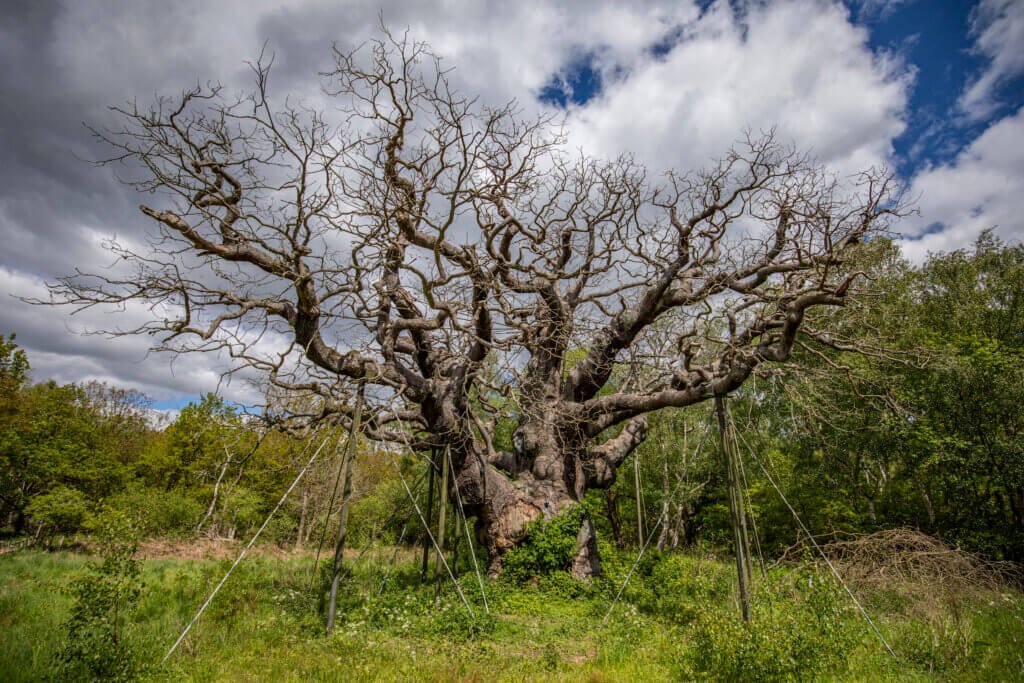
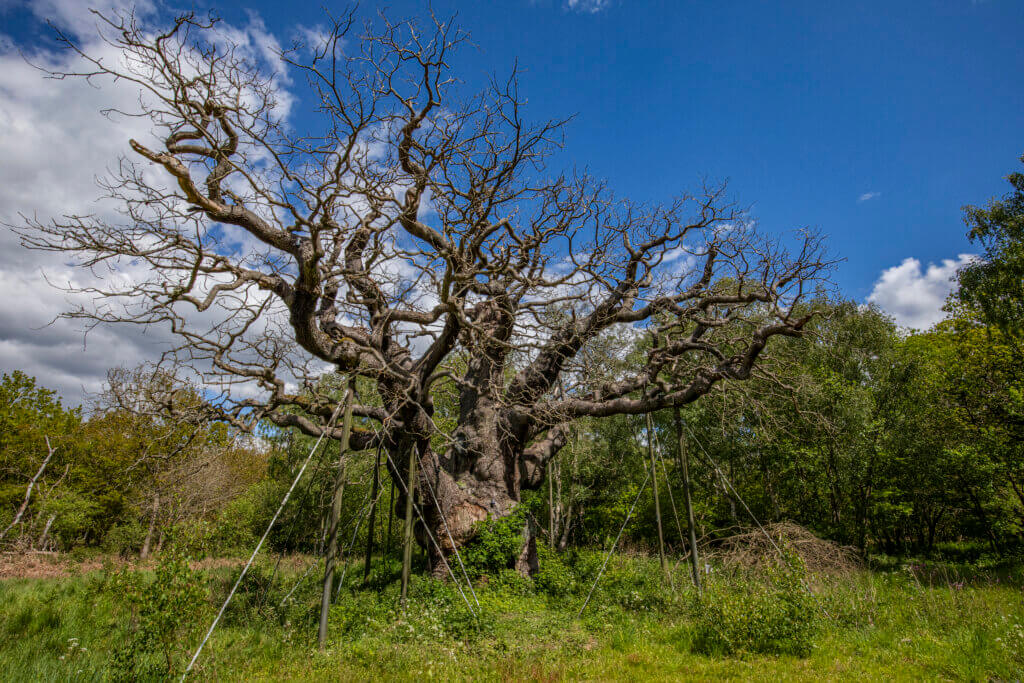
The Major Oak, one of the UK’s most iconic trees due to its vast age, size and links to the legend of Robin Hood, is believed by experts to have died, after failing to produce any leaves this year.
The gigantic tree, which stands at the heart of Sherwood Forest in Nottinghamshire, is estimated to be up to 1,200 years old, but has been in decline for some time. This is despite tireless efforts by the RSPB, which manages the forest, and leading tree and soil health experts, to improve its health and prolong its life.
The tree will still stand at Sherwood Forest as a ‘natural monument’ for visitors and wildlife to enjoy for years to come.
It is impossible to determine one exact cause of the oak’s demise. A complex combination of issues including more than a hundred years of well-intentioned structural intervention and huge amounts of human activity around the tree for more than 200 years are thought to be major contributors. Other factors such as climate change including recent heat waves and droughts have compounded the challenges it would naturally be facing at its great age.
Monitoring the Major Oak
With a noticeable reduction in the quality and quantity of leaves in the last few years, and after several years of surveying, conservation work has centred on the soil beneath the tree’s canopy, which has been compacted from the footfall of millions of visitors over many years. Compaction makes it harder for rainwater to penetrate the soil and for the tree’s complex root system to take in the essential oxygen and nutrients it needs. Recent testing has shown the soil around the Major Oak to be as solid as concrete at a depth of over one metre in some places.
Simon Parfey, Managing Director of SoilBioLab, specialists in soil microbiology testing, has been part of the expert team caring for the Major Oak since 2021. He said: “The soil around the Major Oak was under far greater stress than anyone initially realised. Our early surveys revealed a root system that had been quietly struggling for a long time due to naturally poor soil and heavy ground compaction. While the Major Oak team worked tirelessly to revive the environment around this iconic tree — and saw encouraging signs of life in some areas — the damage, it now seems, was already too deeply entrenched to fully reverse.
This has been a deeply humbling experience for all of us. However, the vital lessons we have learned here will directly help protect and care for other ancient trees across the nation. The Major Oak’s true legacy is no longer just in folklore, but in the future of conservation.”
Reg Harris, Director of Urban Forestry (Bury St Edmunds) Ltd, said he has been monitoring the tree’s health through its leaf canopy for the last nine years for the RSPB, and has seen a noticeable decline in leaf production.
“The most recent decline has corresponded with five very hot and droughty summers, most notably in July 2022 when the UK experienced record temperatures of 40 degrees Celsius.
Given the longevity of a tree such as this, it’s impossible to pinpoint a single cause for its decline. The range of factors affecting it over such a long period of time is very wide and varied, including 200 years of tourist footfall and vehicular compaction, changes to the water table from coal mining beneath it and significant changes to the climate, particularly in the last ten percent of its life.
Sadly, it seems probable the lack of summer rainfall over the last five years, coupled with the unprecedented high temperatures, have had a significant hand in it.”
Chloe Ryder, the RSPB’s Estate Operations Manager at Sherwood Forest, said:
“Previous surveys of the tree have shown concerning declines in its vitality over the past few decades, which is easily recognised in the appearance of the famous leafy silhouette.
In recent years surveys have focused on what’s happening underground, and what we discovered was a surprising and grave situation; a strangled and starved root system in total disconnect to its surrounding environment, and a need to act much more urgently and innovatively than we ever anticipated if we were to reverse the fortunes of this natural wonder.
It’s devastating to accept, but the huge amounts of teaching that the Major Oak has provided won’t be in vain. The knowledge gained from studying and caring for the Major Oak will help to shape how we protect other ancient and veteran trees in Sherwood Forest, the UK and beyond.”
Although this marks the end of the Major Oak’s life as a living tree, its story is far from over. Acorns and cuttings from the tree have been grown into saplings, and plans for the future are being explored with our partners. Chloe adds:
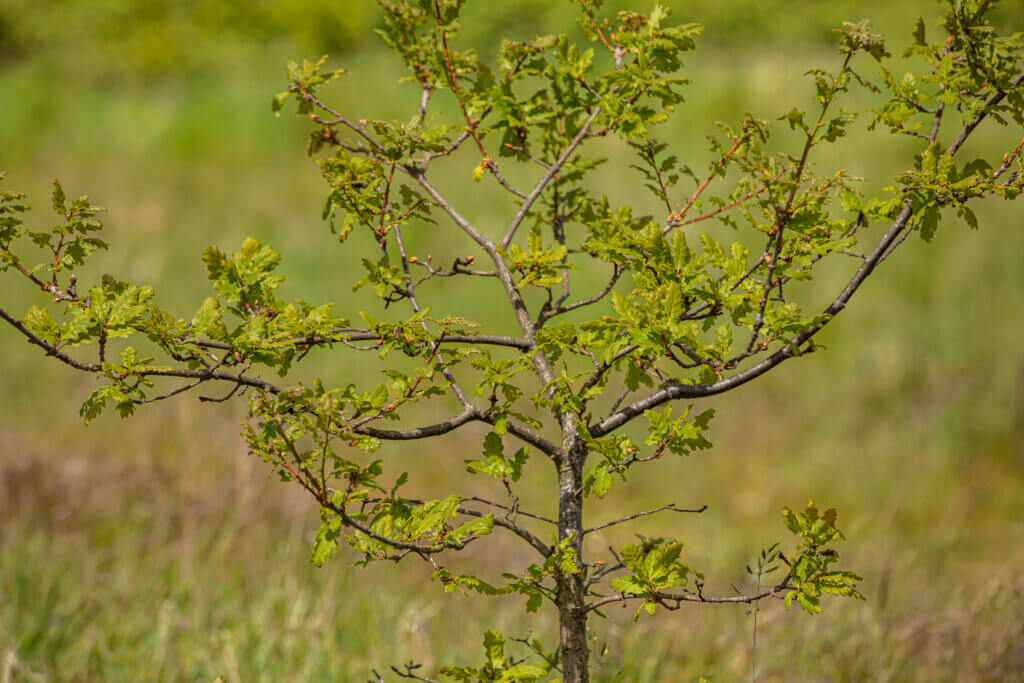
“There are Major Oak saplings planted in locations right around the world, so we are planning work to ensure that its offspring will grow and generate their own acorns – and legends – for centuries to come.”
Despite coming to the end of its life, the Major Oak will continue to be a vital habitat for wildlife at Sherwood Forest. Sherwood Forest is a SSSI (Site of Special Scientific Interest), a designation which ensures it is given the highest protection in UK law. The continual management of the nearly 400 living ancient oaks remains a core priority of the RSPB’s management, using science and lessons learnt from the work around the Major Oak.
The Major Oak has helped to attract millions of visitors to experience a place where history, nature and legend meet, and will continue to do so for more generations yet.
Hollie Drake, Senior Site Manager at RSPB Sherwood Forest, said:
“Whilst the tree’s failure to produce leaves this year is heart-breaking for everyone – from the many people over the years who have looked after this magnificent tree to the millions who have travelled here to see it – we know the Major Oak will have a lasting legacy, first and foremost because it is so inextricably linked to Robin Hood and Sherwood Forest. But beyond its cultural heritage, the Major Oak will continue to provide important habitat for wildlife, reminding us why these remarkable trees are so important and why protecting them for the future matters.
The invaluable knowledge gleaned from taking care of this beloved tree will inform best practice in how we look after ancient oak trees going forwards, not just here but around the world.
The Major Oak will continue to stand at the heart of Sherwood as a natural monument for visitors to come and see, living on in the legend of Robin Hood and continuing to provide as much support to the forest’s ecosystem in death as in life.”
The importance of Ancient Oaks
Ancient is the term given to oaks when they reach 400-years-old, a milestone which brings huge ecological value due to the number of species they support as they age. As an ancient tree begins to hollow and lose limbs, which is natural over time, it provides habitat for lots of wildlife, from rare invertebrates who eat the decaying heartwood to birds using holes to nest in.
Ancient Oaks are like miniature cities made up of hundreds, even thousands, of species of insects, fungi, birds and mammals (thought to be over 2000) – and Sherwood Forest holds one of the largest concentrations of ancient and veteran oaks in Western Europe.
Ed Pyne, Senior Conservation Adviser at the Woodland Trust, said:
“Ancient trees like the Major Oak are the ‘conservation white rhinos of the UK’ but their decline is far less visible. Saving them is vital to the health of the world we live in and yet most disappear quietly, without the recognition or care given to the Major Oak.
The Major Oak was the very first tree recorded on our Ancient Tree Inventory, but recording trees alone will not halt their catastrophic decline. We urgently need stronger legal protections for our ancient woods and trees, as well as more investment in their active care.”
History of the Major Oak
The magnificent Major Oak has been at the heart of this famous forest for more than a millennium, alive since before the Norman Conquest and looking on as other Sherwood oaks were taken to help build Nelson’s navy, raise the roof of St Paul’s Cathedral, and fuel the industrial revolution.
Stories of the tree sheltering legendary outlaw Robin Hood have made it famous around the world. It has had many names but the Major stuck after the tree was mentioned in a book by Major Hayman Rooke in 1790, which began the first proper waves of tourism to the forest.
Millions would visit over the next two centuries, drawn by the legends surrounding the tree, which has continued to be an impressive sight with its vast array of limbs, sprawling canopy and large, hollowing trunk which visitors at one time would climb into.
Supports for some of its larger branches have been in place since the early 20th century and were the first of many human interventions in the tree’s health, many of which were well-intentioned but likely to have contributed to the tree’s demise. The area around the tree was fenced in the 1970s, and visitors since have appreciated it at a distance.
The Major Oak is revered not just in the county of Nottinghamshire, which is fiercely proud of the Oak and its strong association with Robin Hood, but around the UK – it won the Woodland Trust’s Tree of the Year title in 2014 – and around the world too. With a trunk circumference of around 11 metres and a crown of 28 metres, the Major Oak will remain an impressive tree to view for many years to come.
The team of experts caring for the Major Oak will continue to monitor the tree, as well as its structural safety. They will also continue to expand their learnings by completing the planned work around the base of the tree, helping to revitalise the soil and improve the biodiversity of the forest as a whole, and using this work to shape how we care for ancient trees around the globe.
ENDS
[registration_form]
Source link