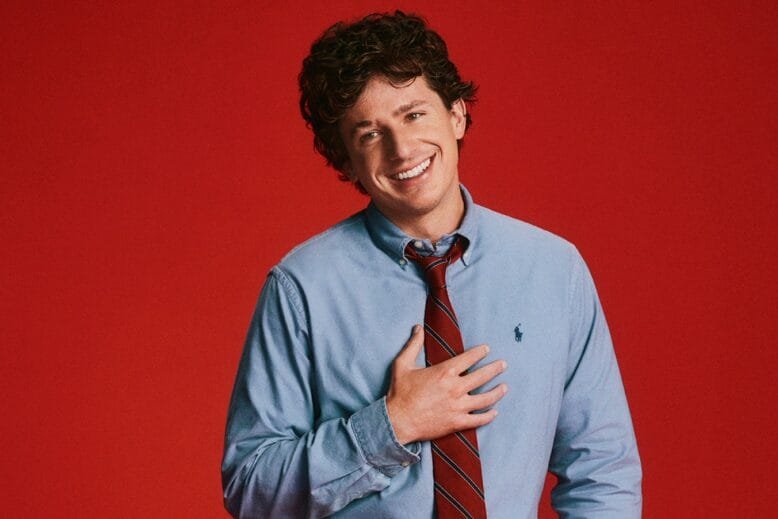
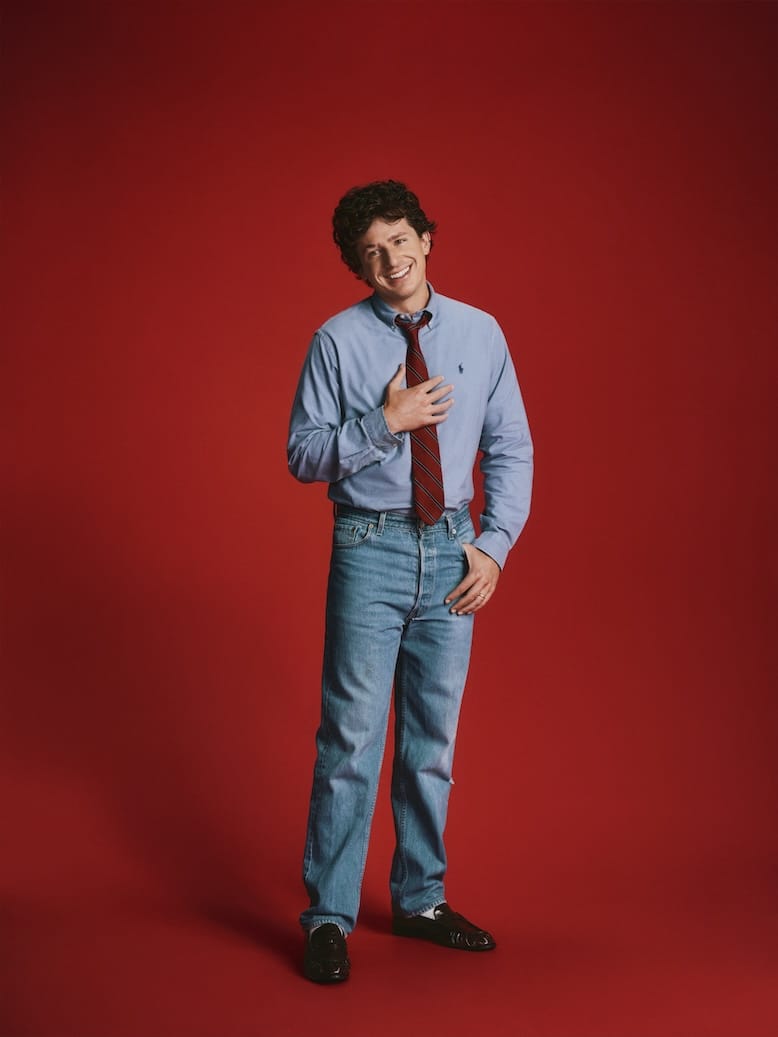
Charlie Puth Photo: Lindsay Ellary
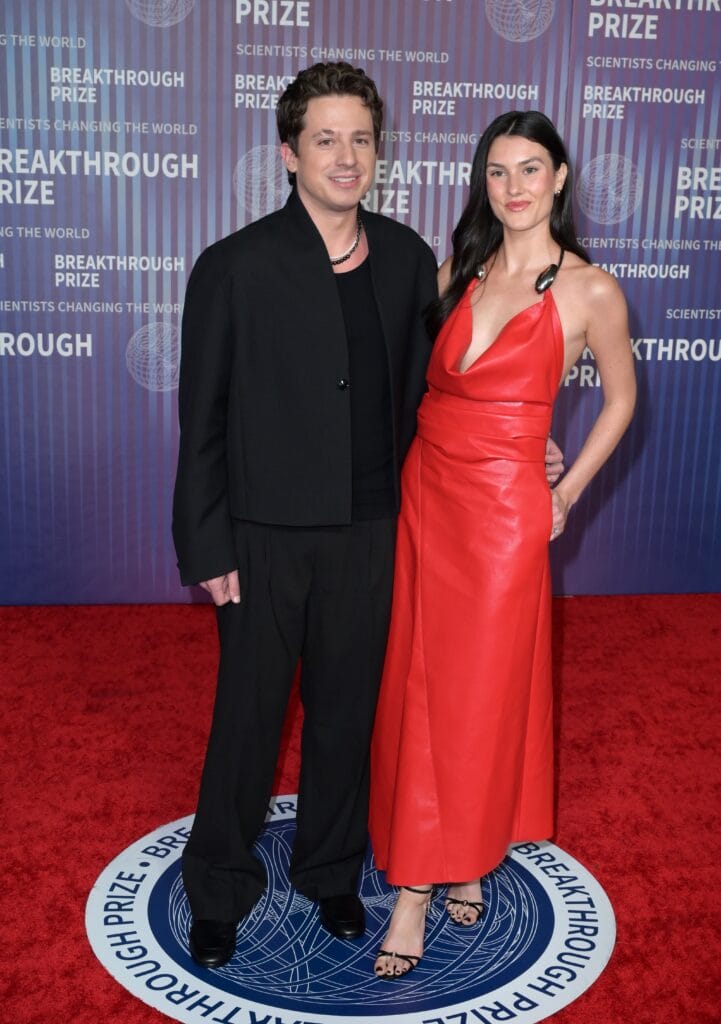
There have been some big changes in Charlie Puth’s life. The Grammy-nominated singer-songwriter married Brooke Sansone, his childhood friend, in 2024. On March 13, they welcomed their first child, baby Jude Crawford Puth, as he introduces the fruits of a new musical direction.
Puth, 34, grew up in Rumson and his first three albums all made the top 10 of the Billboard 200. Even though he lives in California these days, his dear old Garden State is never far from his mind. New Jersey is even a song on Whatever’s Clever, his first album in more than three years.
Puth spoke to New Jersey Monthly just four days before Jude was born, fresh off performing at the Super Bowl, while preparing to release his fourth album on March 27. He’s also heading out on a world tour, which comes to Madison Square Garden on May 29 and Atlantic City on May 30. As he got some steps in on the treadmill, he shared thoughts about entering fatherhood, his most evocative Jersey memories and why this album reveals more Charlie Puth than ever before.
This conversation has been edited and condensed for clarity.
New Jersey Monthly: The lead song on the album, “Changes,” is such an earworm. It sets the tone for this album with the ’80s and early ’90s vibes—the piano, the choir. It activates something in us ’80s babies. What was it like pulling from a lot of those influences?
Charlie Puth: They’re all influences that were playing in the background during my time of living on the Jersey Shore. In New Jersey specifically, there’s a lot of great local talent. And you’d go to restaurants like Barnacle Bill’s and the Inkwell (Coffee House), when it was open, and the Stone Pony, Paramount Theatre, venues like that. You’d hear a great set of local talent that would play all of these covers of songs by Ambrosia, Steely Dan, James Taylor, Bonnie Raitt. From a very young age, I would hear all of this music and be incredibly influenced by it. But for whatever reason—and I guess I’m 10 years into my career—I’ve never made music from my initial inspiration. I guess that’s what this album is.
In “Changes,” you say, “everything has changed and I don’t know why.” Was there a particular development in your life behind those words?
The song itself is about a changing friendship. Life happens. You get married, people move, they don’t see each other as much. And there’s no bad blood or anything, it’s just things change—it’s literally the name of the song. You know why things change, but it’s a hard pill to swallow.
Speaking of sounds that don’t leave your head, the other day I’m in Jersey City, and there was some kind of alarm going off for, like, 48 hours. No one knew where it was coming from. I just kept thinking how you’ve made songs out of found sounds, how you find music everywhere. So I kept thinking, Charlie Puth could be making hay of this sound that is irritating everybody.
For this album, specifically, it was a little bit of a different approach, where all of these songs started off, dare I say, unmusically. It was about the topic at first. You mentioned Changes. I knew I wanted to write a song about the changes that were happening in my life—impending fatherhood, moving, being married, not being with the same circle of friends that I had been with for such a long time. They’re pretty big changes, but everybody can relate to that because everybody has experienced that, one way or the other. And then came the music. Then I knew I wanted to go on the (Yamaha) CP-70 piano and play it in F major. It’s not to say that I’m not going to write music from a sound perspective again, because I love sound. But for this album in particular, it was about the message first and then the music.
You are, as you just said, expecting your first child very soon with your wife, Brooke. What is it like to be dropping this album and a baby at the same time?
It’s a lot of new stuff at once. It could feel a bit challenging sometimes, wrestling with the fact that I’m going to have a baby and going to be, at times, maybe a couple weeks away from the baby. That’s going to be really hard. But the bond that I have with my family, and now my extended family, is just so strong, and they’re going to be there for me like I am for them. And I know my fans have got me, too. So while I’m in the middle of a tour and I might be missing somebody, they’ll remind me that they’re not that far away and I’ll see them soon.
You and Brooke have a New Jersey kind of love story. How old were the two of you when you first met, and how did your relationship change into what it ended up becoming, leading to marriage?
What’s funny is that Brooke’s father is best friends with my dad. They’ve known each other for such a long time, so we’ve always been family friends. It’s really amazing having someone in your life that knows you so well, because I don’t have to ever explain myself to Brooke.
How did getting married in 2024 bring you to make the kind of album that you made? Did it change the direction of the places you might’ve gone?
I knew that I never want to do the same thing musically over and over again. I always want to explore new territory. It might be the Sagittarius in me, always wanting to explore. And getting married, I thought, Why wouldn’t I write songs about my wife? I should. I should write about different things, because it’ll sound like me regardless.
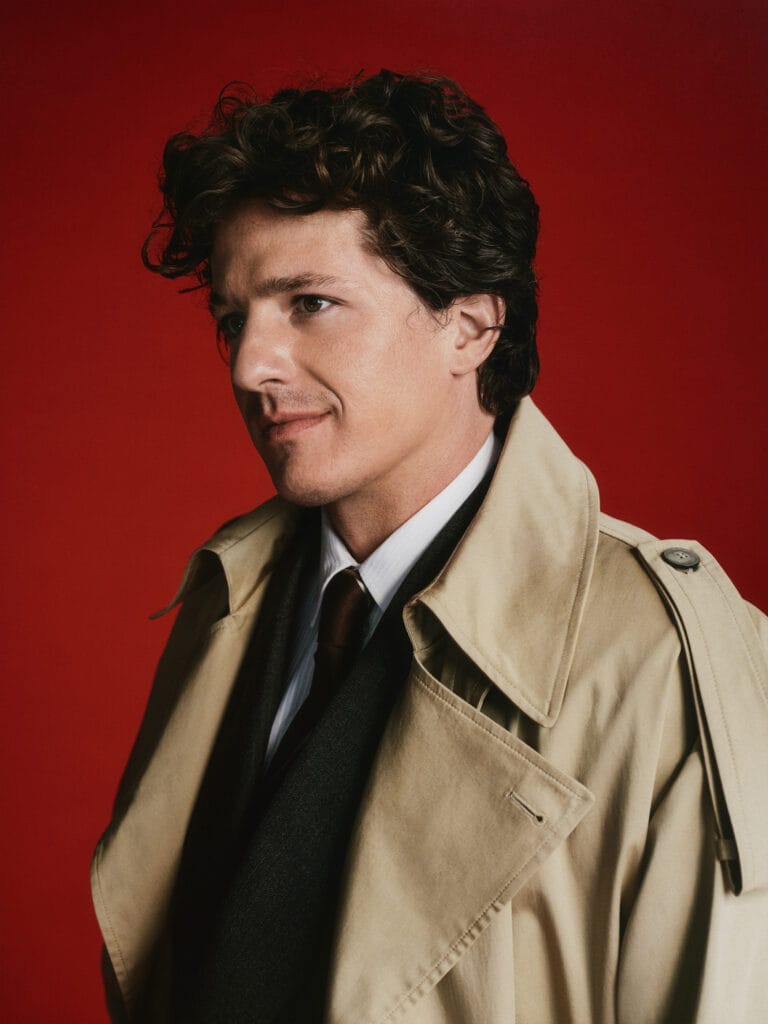
Photo: Lindsay Ellary
That’s Jersey love. Jersey heartbreak is also in this album, with the song “New Jersey” (featuring Ravyn Lenae), about escaping New Jersey because of painful memories of a relationship that didn’t pan out but still seeing its good side. So that’s a true New Jerseyan response, I think.
It’s a song about being stubborn, and New Jersey’s always going to be there for me. And just because I’m upset about something in the moment doesn’t mean it’s forever. New Jersey’s always going to be there for me. A lot of the songs on this album are quite theatrical in that way, and have little sprinklings of comedic timing, if that makes sense.
Of course, we do know that you’re a proud New Jerseyan, through and through, even though you’ve moved out to California, like so many in the business have. Do you make it a habit to stay in touch with people back home? Do you visit?
My family lives there, of course, and I still have friends there. I might find myself back there again one day. I go to New York so much for work, and as you know, it’s pretty close by, so I always make sure to pop in.
If you had to give us a snapshot of your New Jersey childhood, what would some highlights be?
Seeing Bruce Springsteen play outdoors (in 2002) outside the Paramount Theatre. There was a big thunderstorm that was happening, but he still went through with the concert. There’s a very distinct smell that New Jersey has with the honeysuckles in the summertime and the cicadas—it’s like the humidity and heat is just trapped, and it’s nostalgic and wonderful, and you don’t really get that anywhere else. Also, having a thin-crust pizza from Pete & Elda’s, or Briody’s, which doesn’t exist anymore, but Zachary’s has a good pie, too.
Is it important for you to introduce your future child to the New Jersey lifestyle?
Yes. I’ve been very privileged to travel around the world and meet some amazing people, but home is home, and what I love so much about the people in New Jersey is that their heart’s in the right place. They want to accomplish something, they’re going to go to their wit’s end to accomplish it. They’re very hardworking. Regardless, my child will have a little bit of that, because that’s where I come from.
You say this album is sort of the most you album yet, with songs that address your family, your father, your younger brother, Brooke. In what ways did making this album push you out of your comfort zone and make you touch subjects you haven’t touched before? And how did doing that land you in the most sort of Charlie Puth place possible?
Isn’t it funny, this being me seems to be resonating the most with my fans and just everybody. I’m thankful for my past and I’m thankful for those songs because they got me here. I just wasn’t afraid this time to write songs like “I Used to Be Cringe.” And I know that people are going to see that title and wonder what that’s about, but it’s meant to help me grow, and I want to inspire others to grow.
I was going to ask you about that song. You give some reasons why you think you used to be cringe. You say you did it to fit in, basically. What snapped you out of the cringe, do you think, and made you sort of come home to yourself?
When home came to me, and I got married to Brooke, and the families that have known each other for such a long time got together.
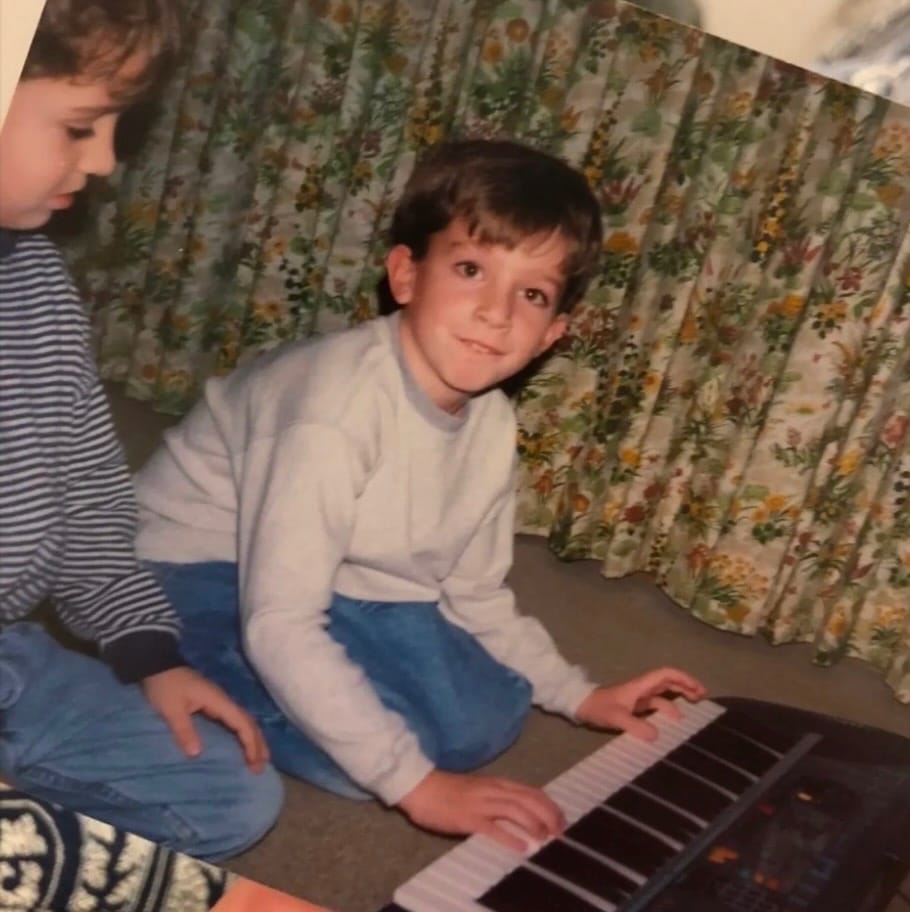
A young Puth plays the keyboard. Photo: Courtesy of the Puth family
Why did you choose Whatever’s Clever for your album title?
It’s a phrase that I kept saying while making the songs. I really wanted to make a point that nothing was overthought while making any of these pieces of music. It was all very intentional. And whenever I would say to my collaborator, (producer and songwriter) BloodPop, “should I use this piano sound?” he said, “whatever’s clever.” Like, that’s what the album’s called.
Your rendition of the national anthem at the Super Bowl was well received. You worked with fellow Jersey guy Adam Blackstone, the musical director, for the performance and I understand you paid tribute to another very famous Jersey talent, Whitney Houston.
If you’re the second New Jersey native to be selected to sing the national anthem, the most televised broadcast, you have to pay tribute to what came before, and what came before just happened to be the best one. And there are certain elements in the string arrangement that (conductor) Steve Hackman and I wrote that are direct callbacks to Whitney Houston’s string arrangement. There are certain callbacks to the way that Whitney sung the melody in my version as well. I’m in the appreciate-what-came-before-you-musically era of my life. That’s why you have Michael McDonald and Kenny Loggins and Jeff Goldblum, Kenny G and great new artists like Ravyn Lenae and Coco Jones and legends like Hikaru Utada on the album. It’s to show appreciation, and that’s what I wanted to do on the national anthem as well.
Seeing your face after you were done singing, it just felt like you had a really soaring moment. What did it feel like to do that, and then to have Kenny G at your side as you’re doing it?
The Seattle Seahawks were playing, and I said to myself, “well, regardless of who wins, I have to have somebody from Seattle play with me.” And Kenny G just so happened to be close by, and he plays a wonderful, soaring soprano saxophone solo on my song “Cry,” which is track three on Whatever’s Clever, and I thought it’d be right to have him as an Easter egg special guest in the orchestra.
He’s just one of a series of fun album features. Another Kenny—Kenny Loggins—and Michael McDonald, both giants of yacht rock, are featured on the song “Love in Exile.” How did you get both of them on one song?
I use music as my manifestation tool, and I had expressed to them that I was making an album that had serious influences in that subgenre of yacht rock, and there were jazzy moments, R&B moments, and those are all moments that they’ve participated in throughout their very well-decorated careers. So I wanted to pay tribute to the genre by inviting them into my Clever world, for lack of a better term, I guess.
You mentioned Jeff Goldblum as well. He’s just Jeff Goldbluming all over the song Until it Happens to You. How did that moment happen, and how did you decide to use him in the way that you did?
Jeff and I met through our love of jazz, and I knew that he could play a jazz piano solo, but what I was really after on this particular song was his voice—where he tends to go with his voice in narration. I wanted the second verse to come on and it be an odd number of bars and go on for a bit in a storytelling way. And I believe that’s what we accomplished. I wanted it to feel like he was speaking to his own children.
Definitely. You get that vibe. And in the song “Don’t Meet Your Heroes,” you sort of lament how a certain guitar-playing celebrity (“I love the way you were a star”) put you through “hell.”
I never said any celebrity. I don’t have a lot of friends who are celebrities (laughs).
Or a certain individual that you wish you “never met” and how you’re “filled with regret.” It reminded me of how there were a bunch of headlines a while back. You had an encounter with Elton John where he panned some of your 2019 music and then you worked with him. (Puth is featured on John’s 2021 song “After All.”). You’ve spoken well of him, but I was wondering if you could talk about the inspiration for this particular track, “Don’t Meet Your Heroes.” Or do you prefer that the identity of the mystery person remain a secret?
I don’t think it’s worth anything. I think it’s kind of like a cheap shot, like “well, this is who this is about.” This song is designed for people to know that I go through the same things that they go through. And we’ve all experienced some amount of disappointment in some ways, being really excited to meet whoever — a musician, actor, whatever, a teacher, I don’t know. Like someone going to a restaurant, and it took you months to get the reservation, and you go there it’s just OK. That’s the feeling that I was trying to encapsulate here. The overall goal for these 12 songs is to show you that I’m going through the exact same things that everybody goes through. We all go through the same things.
Photo: Lindsay Ellary
You had a crossroads around that 2019 time where you decided to scrap what would’ve been your third album, before you went on to release Charlie in 2022, and you had a bunch of singles. Why did you come to reject this music and that direction and want to push in a different direction?
Because there were elements of where I wasn’t telling the truth, and I always told the truth in my music, and I have to always tell the truth from here on out. And that’s what this album is. It’s 12 songs of the truth and nothing but the truth, but different sides of the truth, things I haven’t sung about before. I’ve grown a lot in this past half-decade. The thing that’s going to change is I’m never waiting three years to put another album out. I want to get as much music out as possible.
You have made videos breaking down or educating people on the recording process. I saw you take a video of someone singing on TikTok—”I Gave Her the Moon” from country singer Kenny Whitmire—and turn it into a produced track. Why do you think it’s important to engage with people in this way?
I think it’s my duty because none of this is about me. It’s about inspiring others. It’s about the listener. It’s about making them feel understood through melody, through chords, through the drums. And if I can get on the internet and take someone’s great song, and I can take an hour out of my time and have fun doing it, and add some of the chords that I would like to hear in a song like that, and suggest where the drums could go—I mean, (Kenny’s) now on a tour performing that song and people sing that song back to him. That had never happened for him, as far as I know, and just an hour’s worth of my time that I enjoyed participating in did that, and I do hope I get to meet him one day.
Yeah, it feels like you guys are already friends. I saw you talk about how you had an unfortunate incident when you were a very young child where you got bitten by a dog (resulting in a prominent eyebrow scar). What was remarkable to me was that you got the same kind of dog, a Lab. Was that an intentional move on your part, or did it just end up happening that way, that this Lab came into your life?
My family, we like adopting dogs, and I was at a shelter, and I thought it was the right thing to do. And he’s my favorite little guy. He and I were roommates at one point.
How old’s the dog now?
Six.
And what’s his name?
In a very millennial way, we call him Doggo.
You’ve just been announced as chief music officer for the AI app Moises. Why did you want to take on that role?
Because I believe in tools that help human-made music, and that’s what Moises offers. I’m about to embark on this wonderful tour with my band, and there will be times where before we go on stage, I want to bring them into the dressing room and record on something that I’m working on, and Moises is a tool that I use to help get the demos out of my head so I can show it to my band, and then they can come play on it. And I have a sneaking suspicion I’m not the only musician that uses these tools like that.
There’s a lot of talk about AI—what it might take away from us, what it might give us.
It’s all about enhancing human-made music. That’s the most important thing, to inspire real people to make music, because no AI is ever goingreplace the emotional exchange that happens during a songwriting session that you have with Michael McDonald and Kenny Loggins. Nothing can ever replace that.
Puth and wife Brooke Sansone in 2024. Photo: Featureflash Photo Agency/ Shutterstock.com
You’ve certainly given AI a run for its money with your famously perfect pitch. You once got suspended from Rumson-Fair Haven Regional High School because you so successfully emulated the school’s bell that everyone thought it was real and left early.
The reason why I get on the internet and tell musical stories is because I want it to be entertaining. Music theory, not everybody understands it at times. I try and make it accessible for everybody. Again, it’s about inspiring people to make music. None of this is about me.
The essence of this album that I come away with, even the songs about heartbreak, is you can bop to them. You’re coming at it with this approach that is danceable and groovy and fun. How do you want this album to make people feel when they hear it?
I personally want to feel more understood when they listen to it. I don’t feel like I’ve ever let people into my world as much as I’ve let them in with this album. And I really look forward to people getting to know me better.
New Jersey native Amy Kuperinsky is a film, TV and entertainment reporter who has been covering her home state for nearly 25 years.
Michael B. Jordan’s Oscar win gives the famed arts school its long-awaited award; its former students already have won Emmy, Grammy and Tony awards.
The Goonies is celebrating its 40th anniversary, and a sequel is in the works.