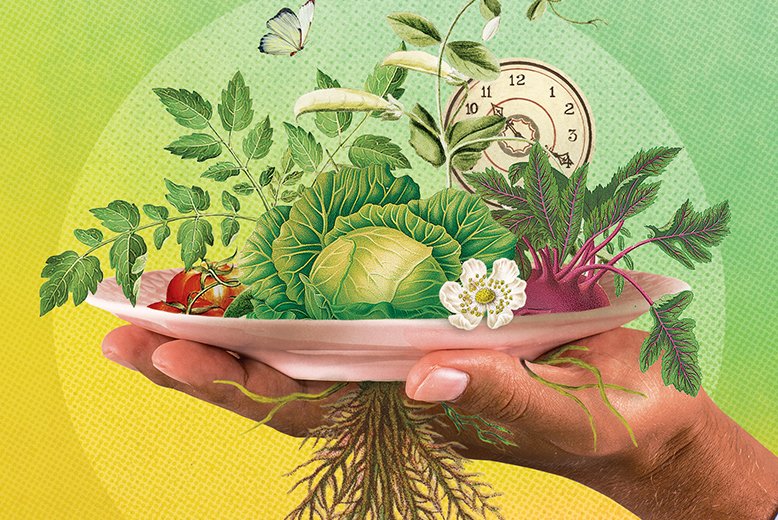
The rustic-chic Italian restaurant Fiorentini is a cozy, family-run affair with an abundance of personality and charm. It may also be the most sustainable place you can eat dinner in New Jersey.
Brenda De Ieso and her chef husband, Antonio De Ieso, weren’t counting on the latter distinction in 2021, when they opened their doors. Then their Florentine roots took over.
“In Italy, we don’t source things that aren’t near us,” Brenda De Ieso says. “You want what’s around you.” In New Jersey, that translates to Antonio De Ieso changing up Fiorentini’s compact menu every three months—once a season—to serve only what local purveyors can provide.
The De Iesos are not the only New Jersey restaurateurs parlaying the Garden State’s bounty into a nightly tribute to eco-conscious dining. Shore-area restaurants like to point out the local seafood they’re serving, while farm-to-table spots often set themselves a tight radius for sourcing romaine and romanesco. Sustainable dining is especially appealing to customers who care deeply about the environment.
But in importing sustainability standards straight from Mother Italy, Fiorentini takes things a step further. The goal was never to run a restaurant to appeal to the sanctimonious and hungry, but to pay homage to a culinary culture whose environmental benefits are so deeply entrenched, they’re practically an afterthought.
“It’s not easy, let’s just say,” says Brenda.
Fiorentini forgoes walk-in fridges and freezers, refuses to serve salmon and occasionally disappoints repeat customers by not keeping their favorite dishes on the menu.
And with the exception of aged cheeses, Tuscan olive oil, salumi and the Italian flour which the restaurant imports for its house-made pasta and bread, “everything we offer is fresh,” Brenda says. Fruits, vegetables, dairy and eggs are trucked in daily from several farms in and around Hillsborough. Fish that’s not line-caught or that swims more than 200 miles off the East Coast doesn’t find a place on the menu, which accounts for the salmon exclusion. And Bone in Food, a New Jersey farm-to-door delivery service, drops off grass-and pasture-raised meat from local regenerative farmers.
“We’re lucky that we’ve found partners that sacrifice animals on the premises,” she says; transporting them for slaughter changes the flavor of the meat.
Ethical as it is, the get-it-while-you-can menu has been known to confound customers and staff. When Fiorentini first opened, Brenda says, “people would say, ‘I came back because I loved this dish so much,’” only to find that, say, the pomodoro they’d been craving had been eighty-sixed because tomatoes weren’t in season. And “the moment the back of the house learns to prepare a dish, and the front of the house learns how to describe it, we’re changing it again.”
But New Jerseyans have largely proved up to the challenge of adopting sustainability, Italian style. “In the beginning, it was, ‘What do you mean you don’t have it?’” she says. “Now we see a spike in reservations when a new menu comes out. People say, ‘I can’t wait to see what you’ve done.’”
The De Iesos’ commitment to keeping green can seem incidental, like a happy accident. It’s different at some of the state’s other sustainability standouts.
Mosaic, the restaurant on the third floor of the newly reopened Princeton University Art Museum, counts the sustainable building practices that went into erecting the museum, which is LEED Gold certified, among its environmental virtues. But it has also committed to composting and gets its ceramic stoneware dishes from Union City artisan Jono Pandolfi, who sources his clay from Northeastern states, according to marketing manager Morgan Gengo.
D’jeet, an upscale lunch and dinner spot in Shrewsbury, grows its own garlic and veggies, including eggplant, arugula and tomatoes. Then “we save all our skins and peels, and they go right back into the garden,” says owner Casey Pesce, who once started an oyster farm with buddies to help protect Barnegat Bay.
The vegan restaurant Gaia & Loki, in Jersey City, is about community education and activism as much as artful plant-based food, says Jackie Thomas, an owner with her husband, Rossi Thomas. Ingredients come from local farmers-market hauls; the couple is working to build a network of local farms, including hydroponic farms, that will enable them to serve exclusively local produce year-round.
The fast-casual chain Just Salad, which has 11 outlets in New Jersey and is opening five more this year, has earned a mention in conversations about where to eat responsibly, too. Alex Chavez, who lives in Brick and is the company’s vice president of training and labor management, says Just Salad was the first restaurant to add carbon labels to its menu, meaning your cilantro lime chicken bowl’s cost in greenhouse-gas emissions is as visible as its cost in dollars. There’s also a popular, chain-wide reusable-bowl program. A spirit of thrift and reverence for the natural world seems to have a through line in all eco-conscious restaurants, maybe Fiorentini most of all.
“Everything we do is rooted in respect for food and ingredients,” Brenda De Ieso says. “Our perspective is, this is the Garden State. Know your regenerative farmers and keep them growing, so they can keep giving back to you.”

“We see coffee as a living expression of culture and craft,” says one Montclair restaurateur.

Great spots for dumplings, specialty groceries and more.


The Garden State’s dining scene has it all—from incredible Italian food to amazing Asian fare, French cuisine and more.

Dig into the Garden State’s panoply of diverse cuisines.