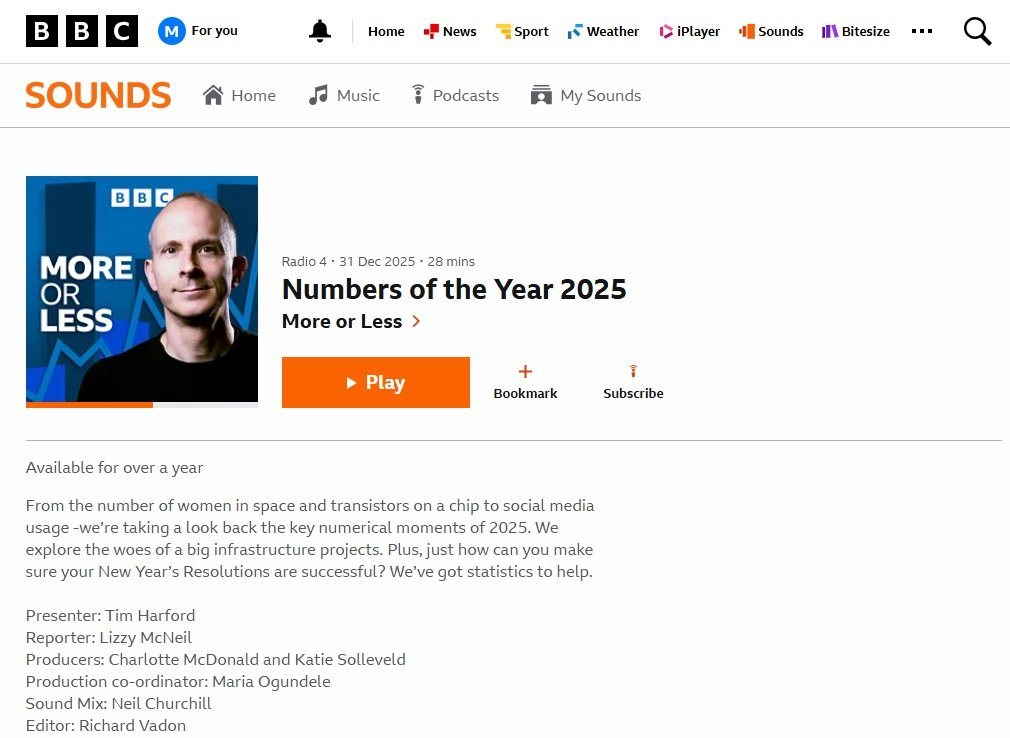

I wrote a blog about a gross factual error (of many orders of magnitude) which was perpetuated by the BBCR4 programme, More or Less, which embarrassingly is a programme about people and organisations using numbers correctly – click here.
I complained to the BBC – as I said I would in the blog.
On Friday, I got a response from the BBC, and I know that many readers of my monthly newsletter got exactly the same response.
This is the response – see if you can spot where they admit their error and say sorry:
Dear dr avery
Thanks for contacting us with your concerns about More or Less – Numbers of the Year 2025 – broadcast on Radio 4 on 31 December. We’ve shared these with the programme-makers. Please accept our apologies for the delay in responding.
The figures referenced in the programme in relation to Hinkley Point C power station were calculated using a government report i.e. the Fingleton report (Nuclear Regulatory Review).
They were based on a 25 year period and on endangered fish, but we recognise more work needs to be done on this complicated story. That’s why we’re continuing our journalism on this matter and will discuss it again in the next programme run.
For information, the story is covered here: How Hinkley Point C’s £50m ‘fish disco’ could save farmland.
Thanks for your feedback.
If you’d like to understand how your complaint is handled at the BBC, you might find it helpful to watch the short film on the BBC Complaints website about how the BBC responds to your feedback. It explains the BBC’s process for responding to complaints, what to do if you aren’t happy with your response and how we share the feedback we receive.
Kind regards,
BBC Complaints Team
www.bbc.co.uk/complaints
No, I couldn’t see the bit about admitting error or saying sorry either.
Is that an end to it? Not for me. I don’t like to be brushed off. If More or Less had simply said ‘Sorry about that, we should have checked more carefully. We’ll try to do better next time but a mistake or two will always get through, but we have corrected this one in the BBC Sounds version of the programme because it can still be heard and added a note to the programme website.‘ then that would be fine.
Not owning up and not saying sorry is worse than the original slip-up in many ways. I reckon that if the BBC thought that what was said was right – they would have said so. So, I’m assuming that they know, now, it was wrong but steeped in corporate arrogance they can’t bring themselves to admit it. Poor show! This behaviour erodes trust, and the BBC trades on being reliable.
I’ll tell you what I’ll do next in my next newsletter – which will be with those thousands who subscribe (free) early on Saturday morning. I’m cogitating.
[registration_form]
Source link