
This is a book about urban wildlife and although the author says that she majors on plants and knows less about other groups she is very clearly competent across a wide range. She is based in London and each of the eight two-chapter sections of the book sees her turning her back on St. Pauls and walking roughly along a compass direction and just seeing what she encounters. Sometimes she is accompanied and at other times she meets fellow naturalists. Whether they are all humming Ralph McTell’s Streets of London I don’t know but if you were thinking there wouldn’t be much wildlife to see then this book will show you something to make you change your mind.
Walking through London brings the author, and thus the reader, in touch with a large variety of species but also buildings, landmarks, traffic, people and opens one’s eyes to the issues and threats affecting urban wildlife just as much as countryside wildlife. Pollution, pesticides, climate change, invasive species, habitat loss are encountered as well as lots of people who care about wildlife and are doing good things.
There is, understandably, an emphasis on plants but that is because you can hardly stand on a pavement and look down without seeing half a dozen plants growing within feet of you. Botanists tend to walk slowly because they have to keep stopping and looking.
I had friends who lived in Blackheath but I never visited them there, and they never told me that it is a ‘botanist’s paradise’ but now I understand why it is and wonder whether they or their neighbours knew. The author visits other UK cities (Edinburgh, Sheffield, Cardiff, Newcastle, Belfast, Liverpool, Aberdeen) and Berlin too.
The book is well written and kept my interest but I would have liked just a few drawings sprinkled around the text to break things up and to show some of the species talked about. Also, my preference is for species names to be capitalised and that isn’t done here. Although the arguments either way are fairly finely balanced this book has a lot of species names, and many plants, and some other species, have names that begin with adjectives (eg creeping, a colour, something to do with hairiness or non-hairiness and many more) and more than once, in my relative ignorance, I had to stop and realise that this was the name of a species rather than simply a description of an organism.
Overall, I think this is a very good book and works for those who are expert in one or more taxonomic groups and for those with an inexpert interest in wildlife. Many of us live in towns and I’d recommend letting Amanda Tuke take you by the hand and lead you through her streets and, you never know, you may want to explore yours more fully as a result.
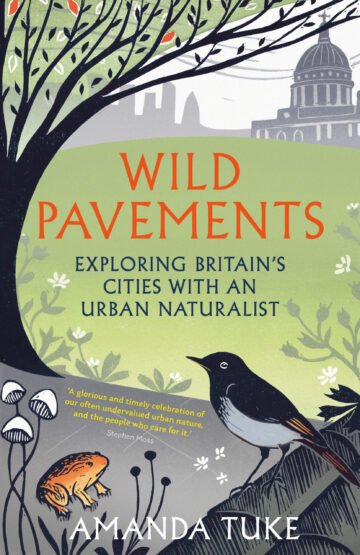
The cover? I could get a bit picky about the colour of the top of that Black Redstart’s head but it’s a pleasing cover and goes some way to setting up the idea that there is plenty of wildlife in built up areas. I’ll give the cover a solid 7/10.
Wild Pavements: exploring Britain’s cities with an urban naturalist by Amanda Tuke is published by Flint Books.
[registration_form]
Source link