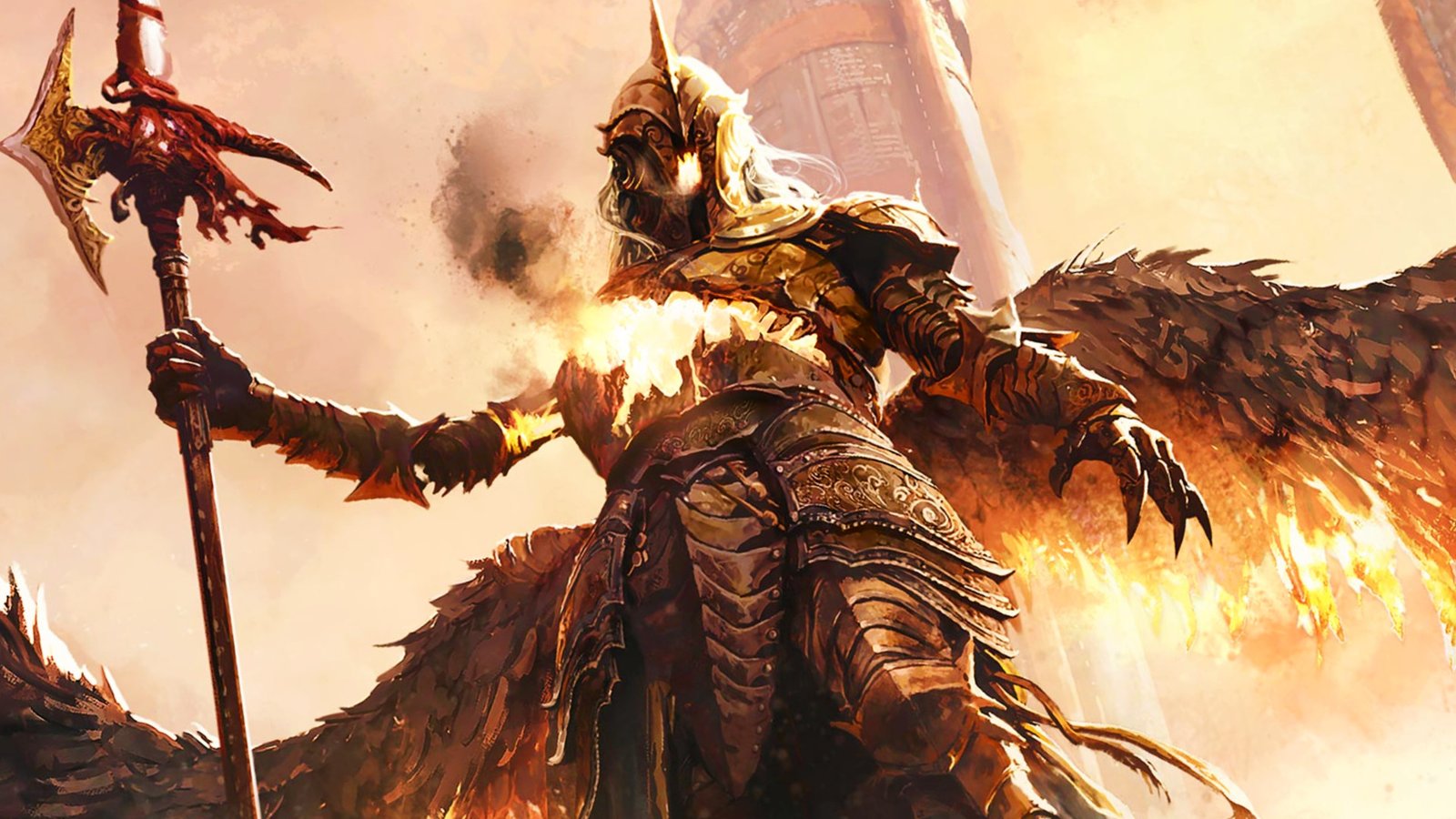
Path of Exile 2 Return of the Ancients is so big that it’s scary, both as a player and someone attempting to summarize it. My quick-form notes from the Grinding Gear Games presentation alone come in at almost 900 words. On the cards is a complete endgame redesign, built to feel more deliberate and structured, while giving you more control over what and how you play. There are also a heap of extra systems including Atlas Ascendancies, evolutions of all of the core mechanics, and new league Runes of Aldur. The good news is that, despite this, the new PoE 2 update is likely to make the action RPG more approachable for everyone.
Path of Exile 2 patch 0.5 delivers on last season’s missed promises of endgame changes, and GGG is compensating in the best way possible, with what Game Director Jonathan Rogers describes as the biggest single update for either PoE 2 or its predecessor. I’ll follow the developer’s lead and start by talking about the new league, but just know that we’ve got a complete endgame rework to cover later, plus some incredible quality-of-life features such as properly integrated in-game build guides and indicators to make campaign progression faster.
To rip the band-aid off up top before we get into the weeds, there are still no swords, no act five or six, and no new full classes (although we do get two more ascendancies, and they sound pretty special). Rogers does, however, reveal that this new PoE 2 patch is planned to be the last major update before the game launches into 1.0, providing that the endgame changes are well-received enough to lock them in for the time being. He wants that launch to be in 2026, likely after Exilecon in November, and it will include the complete campaign and three ascendancies for every class that makes it in.

The new PoE 2 0.5 league is Runes of Aldur, and fellow Game Director Mark Roberts walks us through what that entails. Rescuing blacksmith Farrow in the early region of Clearfell, you’ll start to investigate the ancient art of Ezomyte Runesmithing. This is done by activating remnants that appear in each area. You’ll choose between a series of potential symbols to combine, each of which promises a specific reward but requires you to battle a wave of enemies empowered by a combination of elements in order to earn it.
These rewards start out as basic offerings such as crafting currency, but gradually amplify into more powerful and unique payouts, including over 100 new runes that can be used to craft gear in specific ways. As Farrow learns more about the origins of the Ezomytes and their connection to Kalguur, he’ll gain new ways to augment equipment through Runeforging, which applies a stat called Runic Ward. You’ll also be able to amplify low-level uniques into a form viable for the late game, and augment specific Kalguuran uniques in new ways.

Runic Ward works a bit like a ‘backup’ health pool that will kick in to save you if your normal life runs out, but it can also be used to cast a range of new Kalguuran skills. These typically spend Runic Ward to cast rather than mana, and they have no color alignment, so no attribute requirements. They include the likes of Frostflame Nova, which causes any burning enemies to be inflicted with frostfire, applying both elemental debuffs at once. There are a range of Kalguuran supports too, which will allow you to amplify new and existing abilities with infusions of Runic Ward.
The Runes of Aldur league also pays out a currency type called Alloys, which can be used to craft modifiers on items that aren’t typically possible. Once you meet up with Danig in act four, Farrow will begin joining Expeditions, allowing you to integrate the seasonal remnant mechanic into all of your runs. This system has also been expanded with even more potential modifiers, like sulphite clusters you can detonate for rewards at the cost of enraging the mighty Brughor the Insatiable.

The final piece of the league kicks in when you hit the endgame, where you’ll notice that the starting region is now much more structured and features specific league mechanics in fixed points on the map. Every one of these has a unique new quest line tied to it that’s designed to give you direct objectives to follow for every mechanic. As you branch out further, it’ll resume a more random mix of all the options, but this makes it much easier to progress targeted objectives.
The first example we’re shown is with Expedition, where you’ll use logbooks to open up entire island networks at a time, exploring encounters across each of them. At the end of the first, you’ll delve into the tomb of Ancient Kalguuran, Medved, who isn’t quite as dead as you expected. Upon their defeat, you’ll get your next logbook, and continue to branch out further into the ocean, sector by sector. In particular, watch out for the tomb of Uhtred, the Stardrinker, which will push you towards the new Expedition pinnacle boss and its ultimate rewards.

With the league out of the way, it’s back to Rogers and time to dig more into that endgame overhaul. As mentioned, each league now has a dedicated initial zone where you’ll pursue a quest chain that leads to its final encounter. At the center of all of this is a giant fortress, a relic of the precursors risen from underground. This has its own story, too, and following it to its conclusion will guarantee you a showdown with the Arbiter of Ash. This is no longer PoE 2’s ultimate pinnacle boss, however; that’s found at the very center of the fortress, and you’ll have to get there yourself to discover what it entails.
All four individual mechanics from launch have been reworked and upgraded, with their own main quest and pinnacle boss fight. Breach integrates PoE 1’s Keepers of the Flame systems and a more worn-down incarnation of the Genesis Tree, which you can gradually nurture to expand the items it can grow. Delirium and Ritual both have new looks, and GGG has addressed some of the more common frustrations with them. Ritual rewards, for example, are now always uniques or omens, and you can sacrifice leftover tribute to approach the King of the Mists.

I asked Rogers about the speed of these regions after the presentation, and he told me that experienced players can probably get through a single zone’s quest in a solid four-to-five-hour evening session. New leagues will also get their own quests to match, although he emphasizes that he doesn’t expect everyone to finish them all every league. By the time you’ve completed the fortress, you’ll have your full Atlas tree unlocked (more on that in just a second). GGG is also considering repositioning zones between leagues to keep that early section of the Atlas map feeling fresh.
Along with the map redesign comes a new Atlas passive tree, which has been completely remade. It’s now more potent than before, and you have the ability to unlock the entire thing, removing those constraints of feeling forced to respec based on what you were currently doing. There will be many nodes that offer a choice between several possible options, giving an element of player choice, but they’ll be easy to swap. Some will buff a specific play style; others could make map bosses easier or harder, depending on how confident you feel.

That’s still not the end. “We didn’t think that was enough,” Rogers remarks. The ‘Masters of the Atlas’ storyline will allow you to unlock what is effectively an Ascendancy class for your Atlas tree. You’ll train with specific masters to earn bonuses with each rank you gain, with some offering simple reward boosts and others entirely shifting how certain map types behave. Perhaps you’d like double unique drops from pinnacle bosses? You can have it, if you’re prepared to cap yourself at a single attempt to bring them down.
League challenges have arrived in Path of Exile 2, and much like their PoE 1 incarnation they’ll grant you a special cosmetic armor set for proving your skills in the current league. There will be eight tasks to complete in total, with your first piece coming after two and your final one awarded for finishing the full list. Our first is the Knight of Aldur set. Alongside this comes a new statue for your hideout, which you can use to show off your challenge rank.

While we don’t have any new base classes, we do get two Ascendancies: the Spirit Walker Huntress and Martial Artist Monk. The Spirit Walker communes with the three Azmerian animal spirits, allowing you either to specialize in one or combine all three for a free bonus talent. Its most exciting trick is The Natural Order, which allows you to tame beast bosses and use them as companions. Sick of dying to the Mighty Silverfist, or the Chimeral Beast? Bring them over to your side and turn them against the world.
The Martial Artist, meanwhile, allows the Monk to create illusions of himself that utilize a chosen skill, generate bells that you can shatter, or damage all enemies in a radius with every critical strike you land. It can adopt the Way of the Mountain to cover itself in stone, mitigating incoming damage and enhancing your own, or adopt Way of the Stonefist, where any gloves you equip (including uniques) will be instantly modified into powered-up stone variants. It can even engrave runes directly onto its own body for extra bonuses.

We’re finally coming to the end, but there are a few more big notes. The Vaal Temple is moving to core, and has been adapted to put a stop to some of the ‘snake’ builds that were dominant last league. Rooms that can’t be removed due to position but need to be cleared will now become empty instead to compensate. Of course, you can also expect a whole range of new unique items: among them, The Raven’s Flock grows an expanding circle of birds that fly around you at all times and constantly damage enemies they touch, functioning a lot like beloved PoE 1 skill Righteous Fire.
On the quality-of-life side, the biggest addition by far is the in-game integration of build guides. You’ll now be able to import builds directly into Path of Exile 2 using a special file, and when activated this will do everything from highlighting points on the passive tree to recommending skill and support gems. You can also write specific notes for each item slot. There’s full support to have this automatically change over time based on your character’s level, so it can dynamically shift to reflect your progression through the game.

Grinding Gear Games has already been working with build site Maxroll to start offering these right from the get-go, but Rogers tells me he expects other common tools like Path of Building to add the ability to export your created builds for us in game. This doesn’t replace those, but supplements them and makes them much easier to follow on the fly. You won’t be able to search for guides directly in-game, however; Rogers explains that he’s wary of making it feel like players should be following a build guide, rather than it being an optional extra.
To help you speed through the campaign faster, GGG is introducing subtle environmental clues to guide you to key areas, much like the way PoE 1 does. You probably won’t notice most of these your first time through, but veterans will have an easier time zooming to the endgame. There are also some other welcome additions, such as a live-updating search box for your Atlas maps, and an improved in-game market that will make it easier to compare how prices change as you add or remove specific modifiers. You can even shift-alt-click an item to quickly search for its current prices on the trade market. Oh, and there’s a Mageblood… you’ll have to find it to see what it looks like in PoE 2, though.

That really is it. Phew. As noted, Return of the Ancients is planned to be the last major update before the jump to PoE 2 version 1.0. This does mean we’ll be waiting a little longer for it than normal. The traditional schedule would have put the next league in August, but it’ll now arrive closer to the end of the year, “some time after Exilecon.” That’s taking place on Saturday November 7 and Sunday November 8, so I’d expect to see a big showcase there.
Path of Exile 2 patch 0.5 ‘Return of the Ancients’ releases on Friday May 29. You can expect the full patch notes to arrive one week prior, most likely on Thursday May 21. This is slightly later after the reveal than normal – Rogers notes, “Because this update contains so much endgame content, we’re doing significantly more testing than usual.” With so much to relearn, I think I’m going to need all of that extra time to prepare.
Source link