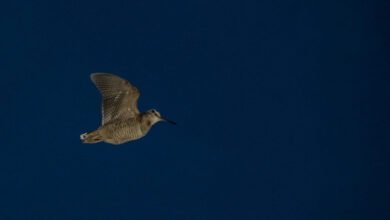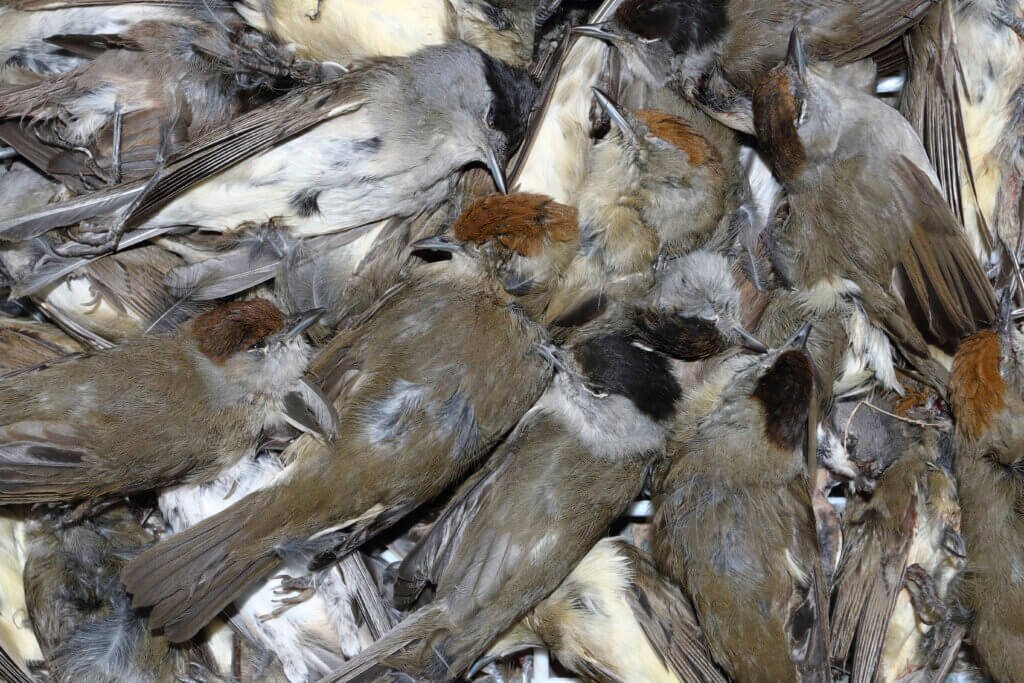
An estimated 726,000 migrating songbirds were illegally trapped and killed on the island of Cyprus last autumn, a new report from BirdLife Cyprus has revealed.

Species including Blackcaps, Redstarts, Whitethroats and Willow Warblers were found to have been caught using mist nets and limesticks within the survey area, which includes land around British military bases.
Cyprus is an important part of the migration route for many birds as they move between their breeding grounds in Europe to their over-wintering grounds in Africa. Criminal gangs use electronic devices that imitate the calls of migratory birds to lure them into the trapping sites. The dead birds are then sold on the black market to restaurants in the Republic of Cyprus for use in the local and expensive dish ‘ambelopoulia’, or for home consumption. The Cyprus Game and Fauna Service has estimated this illegal business is worth in the region of 10 million Euros per year.
Although the overall level of trapping with mist nets in 2025 was just 4% higher than the previous autumn, there were vast differences in their use between survey areas. The report’s findings show a direct link between the level of enforcement action by authorities and the amount of trapping taking place.

In the Eastern Sovereign Base Areas, trapping with mist nets increased by 55% compared to 2024. This rise followed a change in enforcement tactics by the Sovereign Base Areas Police, who shifted from proactive night patrols throughout the trapping season to a more reactive approach based on targeted ambushes. The reduced visible presence in the field appears to have been quickly exploited. Most concerningly, trapping activity was recorded again at Cape Pyla, a notorious hotspot where no trapping had been documented since 2019.
In sharp contrast, trapping with mist nets in the Republic of Cyprus fell by 47%. BirdLife Cyprus believes the decline was in part due to targeted enforcement action against three major organised trapping sites in the Larnaca district. After British naturalist Chris Packham working with the Committee Against Bird Slaughter (CABS) brought international attention to large-scale trapping on the island, Cyprus Police carried out eight co-ordinated raids, issuing fines exceeding €157,000. In one case, nearly 1,000 dead birds were discovered packaged and ready for sale. Drugs and weapons were also seized, exposing the clear links between illegal bird trapping and organised crime.
BirdLife Cyprus’ Campaigns Coordinator, Tassos Shialis, said: “Our findings for autumn 2025 send a very clear message. Consistent, visible and targeted enforcement works. When that deterrent presence weakens, illegal trapping rebounds. Moreover, the recent arson attacks on cars of the Game and Fauna Service are a clear indication that illegal bird trapping and poaching have turned into a lucrative business, and the law breakers will not hesitate to carry out attacks against game wardens and police officers.”
Jake Zarins, Head of UK Overseas Territories programmes at the RSPB, said: “The ongoing monitoring of illegal bird trapping carried out by BirdLife Cyprus clearly illustrates the most effective ways of preventing such criminality is through persistent and visible deterrents. The efforts of the Sovereign Base Areas (SBA) police force over many years have helped drastically reduce the incidence of bird trapping within the SBA’s and the RSPB, whilst appreciate of this work, is keen to ensure that policing of these illegal activities remains a priority alongside other growing demands for policing resources.”
To find out more about how the RSPB is working with BirdLife Cyprus and both the British and Cypriot governments to protect songbirds on the island please visit: https://birdlifecyprus.org/combating-bird-crime/
ENDS
[registration_form]
Source link