Boost for one of the UK’s rarest birds at key site
- The RSPB has revealed a promising increase in the number of Capercaillie at RSPB Abernethy in Scotland with 30 lekking males recorded in 2025, a 50% increase since 2020.
- The Capercaillie was once more widely spread across the UK but is now confined to native pinewood forests of Scotland where their total population is estimated at 532 birds.
- The Scottish Government has announced the Capercaillie Emergency Plan, led by the Cairngorms National Park Authority and NatureScot. This has the aim of reversing long-term population declines of this iconic species.
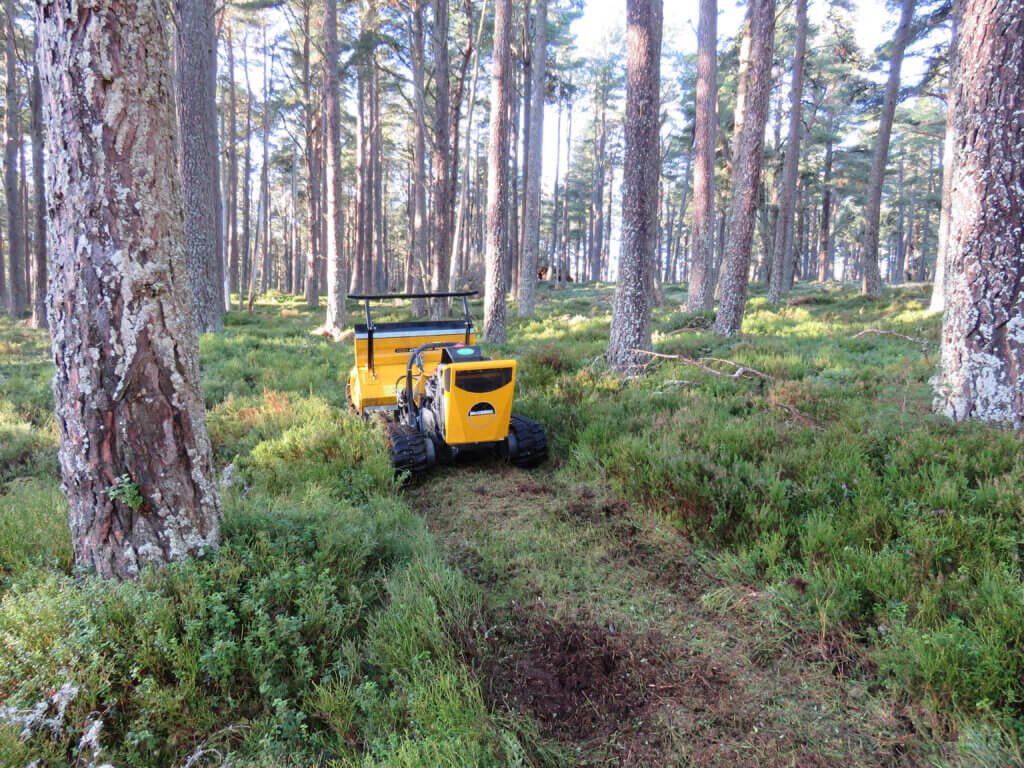
The RSPB is celebrating a 50% increase in Capercaillie at its Abernethy reserve over the past five years, helping to boost the numbers of this critically threatened species in the UK. The boost in numbers from 20 lekking males counted in 2021 to 30 in 2025 is a critical lifeline for the population of just over 500 birds. Two innovative trial methods of a remote-controlled cutter and ‘virtual fence’ cattle collars for large-scale management of their vital pinewood habitat, are part of the huge conservation efforts to promote the Red Listed species’ recovery.
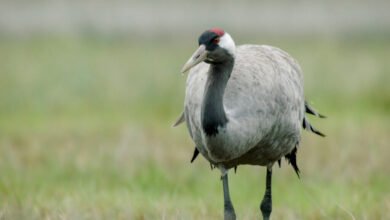
Within the UK, the large grouse can only be found in Scotland’s Caledonian pine forests. Male Capercaillie have black feathers with a metallic green sheen, and a fan-shaped tail. Their sheer size and the male’s “clip-clop” call during lekking gives them the Gaelic name “horse of the woods” and males also have a distinct thick red wattle (area of bare skin) above their eyes and a hooked yellow bill. Females are much smaller and mottled brown, grey and black. “Lekking” describes the males’ courtship behaviour where they perform a display of clicks, pops and “flutter jumps” at lek sites.
Urgent recovery of Capercaillie is needed. Across Scotland, their numbers have been declining significantly for decades. Decline of habitat quality and extent, natural egg and chick predation, collision with deer fences and human disturbance mean the species is at serious risk of extinction. The most recent national survey (2021-2022) estimated only 532 Capercaillie remain. This is the lowest recorded level since surveys began in 1992-1994 and a 52% decline since the previous survey (2015-2016) when the population estimate was 1114 birds.

At RSPB Abernethy, one of the last remaining strongholds for Capercaillie, two large-scale ground vegetation management methods are being trialed to increase the population. A remote-controlled mower is used to remove dominant heather in difficult terrain to allow Blaeberry to emerge, an important food source for Capercaillie and host to moth caterpillars that are a critical food for young chicks. The mower also creates open bare areas where chicks can stay warm and dry after rain. Virtual fence collars also enable targeted forest grazing with cattle in areas where fencing would be hard to install and could present a danger to flying capercaillie. Abernethy now holds more than 20% of the 143 lekking males recorded this year in the national lek count.
RSPB Abernethy Conservation Manager, Richard Mason, said: “The increase in the number of lekking male Capercaillie is thanks to the huge amount of work we are undertaking to improve habitat quality. The combination of cutting and extensive cattle grazing has dramatically improved conditions in the forest. We are seeing many chicks reaching full size and whilst the future of Capercaillie remains in the balance, we are hopeful that these techniques can support their recovery in Scotland.”
With the recovery of Capercaillie remaining a high priority, the RSPB is working with landowners, partners and the Scottish Government across the Capercaillie range in Scotland to have the greatest impact. Alongside the two trial methods, other measures are also underway. This includes increased public awareness around the plight of Capercaillie to help minimise the risk of disturbance; diversionary feeding of predators; forest restructuring; bog woodland restoration; undertaking further research and monitoring to inform conservation action; and holding advisory events for forestry managers. Through Cairngorms Connect, the RSPB works in partnership with NatureScot, Forestry and Land Scotland, Wildland Ltd and Cairngorms National Park Authority to deliver action on the ground and more widely to secure support for our work.
Richard continued:“There is still a lot of work to be done for Capercaillie, not just at RSPB Abernethy, but across all Capercaillie sites in Scotland. We know that their recovery is only possible by working together and in collaboration with others. It is exciting to see that other land managers looking after Capercaillie habitat are also undertaking innovative vegetation management with support from the Scottish Government’s Nature Restoration Fund managed by the Cairngorms National Park Authority. By enhancing these native pinewood forests, we can collectively work towards the recovery of this incredible bird.”
The LIFE 100% for Nature project provided funding for the initial trial of the remote-controlled mower and virtual fence collars. This pioneering project has shown how Scotland can deliver on its ambitious biodiversity targets and help meet international conservation commitments. Trialing innovative techniques and demonstrating best practice land management solutions enables further rollout across Scotland. By creating better conditions for Capercaillie, land managers can give them the best chance to recover.

ENDS
[registration_form]
Source link