Rare Pennine wading bird given boost as RSPB survey reveals Dunlin breeding success

- First-ever large-scale survey reveals rare Dunlin still breeding across the North Pennines, offering new hope for a declining species.
- RSPB-led project uses technology – including drones, cameras and acoustic recorders – to uncover hidden upland bird populations.
- Partnership conservation delivers results, with Dunlin chicks confirmed at High Helbeck estate.
A pioneering survey led by the RSPB has confirmed that Dunlin – a rare and declining upland wading bird – are breeding across large areas of suitable habitat in the Cumbrian Pennines, part of the North Pennines National Landscape, offering fresh hope for the species’ future in England.
Funded by Natural England, the 2025 survey is the first coordinated effort of its kind across such a wide upland landscape in Northern England, providing vital new evidence about where Dunlin are surviving and what they need to thrive.
The survey was carried out by the RSPB’s conservation team, funded by Natural England, and delivered in close collaboration with landowners.
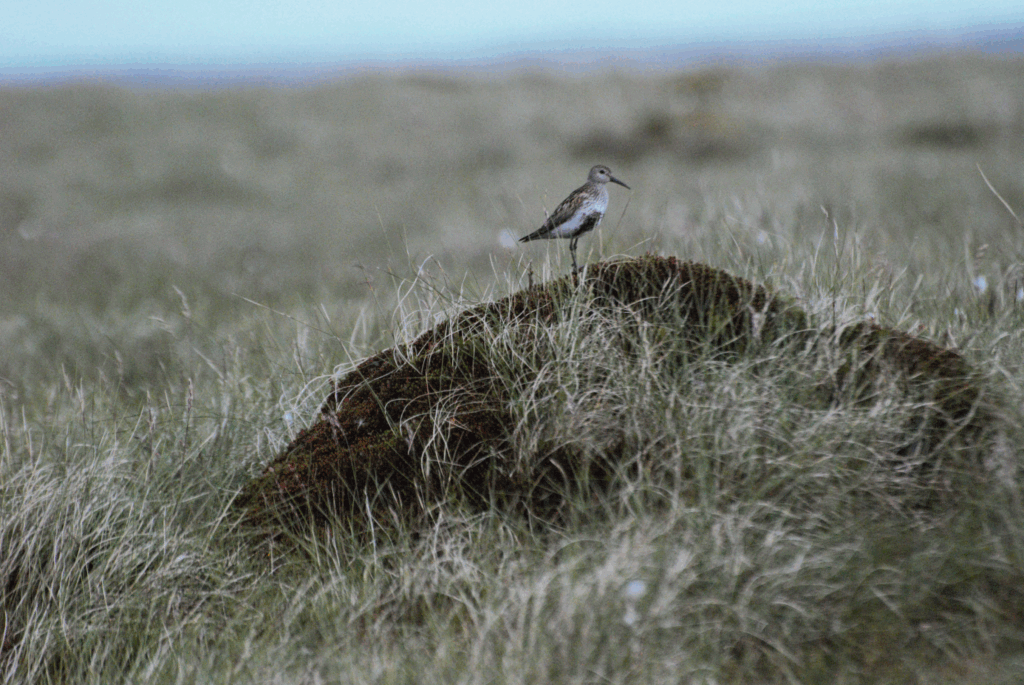
Dunlins are a small, starling-sized wading bird with striking breeding plumage. They’ve declined by at least 20% globally since the early 2000’s and the IUCN Red List now classify the species globally as Near Threatened. In the UK, the species is now Red listed. They have suffered a moderate decline in their UK breeding range, likely due to declines in habitat quality.
Fourteen locations were surveyed across the Cumbrian North Pennines during the Dunlin breeding season from May to July 2025, with around thirty individuals recorded at eight of them, and the results show that the species remains present across significant areas of high-quality upland habitat. The surveys, assisted by committed volunteers, including from Cumbria Bird Club, focused on remote, wet upland landscapes of the North Pennines, including the High Helbeck Estate, where conservation work has been ongoing for several years including peat restoration work (led by the North Pennines National Landscape team).
Dunlin breeding in the North Pennines undertake an astonishing annual migration, travelling thousands of miles to winter in West Africa. Understanding where they breed, and the condition of their habitats, is essential to securing their future. And, until now, there has been no large-scale coordinated survey of Dunlin across this landscape, leaving major gaps in conservation knowledge.
RSPB surveyors worked in challenging terrain, often far from established tracks, using a combination of traditional field survey methods alongside remote cameras, acoustic recording devices and drones to assess habitat condition. At High Helbeck, the RSPB team surveyed areas where Dunlin were expected to occur and were delighted to confirm breeding birds, including camera footage of Dunlin chicks feeding in a bog pool.
High Helbeck was previously the focus of a Green Recovery Challenge Fund project (2020–2022), led by the North Pennines National Landscape team and delivered in partnership with the RSPB, Natural England, the Woodland Trust and landowners Nicolete and Ben Blackett-Ord and work to restore habitats and improve biodiversity continues through this strong partnership.
Dr. Elisabeth Charman, Senior Conservation Officer, the RSPB, said: “The team surveyed in remote areas, well away from established tracks and on challenging ground. To find Dunlin breeding in new areas was extremely rewarding, and we hope our partnership efforts can contribute to their continued success in the Pennines.”
Nicolete Blackett-Ord, joint landowner High Helbeck, said: “It has been extremely rewarding to take part in this project. We’ve learnt such a lot about this threatened species’ distribution and habitat needs. To confirm breeding at High Helbeck is particularly special because we have worked with the RSPB and partners for several years, improving habitat, to enable wading birds to thrive.”
Kath Milnes, Higher Officer for Natural England in Cumbria, said: “This fantastic work across the Cumbrian Pennines clearly demonstrates how investing in nature delivers multiple benefits for everyone. By working with landowners and conservation partners to restore and re-wet peatlands, we’re creating the right conditions for species like Dunlin to thrive.”
The North Pennines is one of the RSPB’s ‘Priority Landscapes’ where resource and conservation efforts are focussed. The RSPB is marking over twenty-five years of wader conservation work in the North Pennines, celebrating the dedication of volunteers, local farmers, advisers and partners. The RSPB hopes these new findings will encourage more records of Dunlin from upland areas, helping to build a clearer picture of the species’ status and inform future conservation action across the North Pennines.
ENDS
[registration_form]
Source link